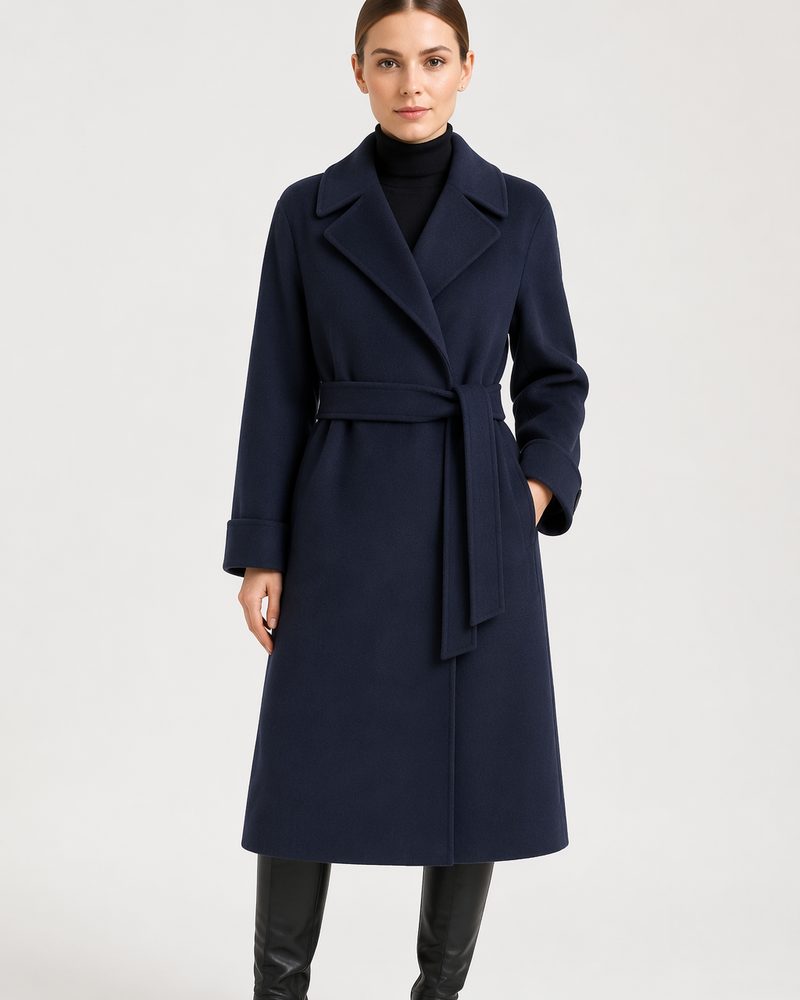
Double-faced wool · Guangzhou
Double-faced wool coats, made to your label.
One construction, six patterns. Two faces of cloth joined into a single garment: no lining, the edges closed by hand or machine. Cut to your measurements, finished under your label.
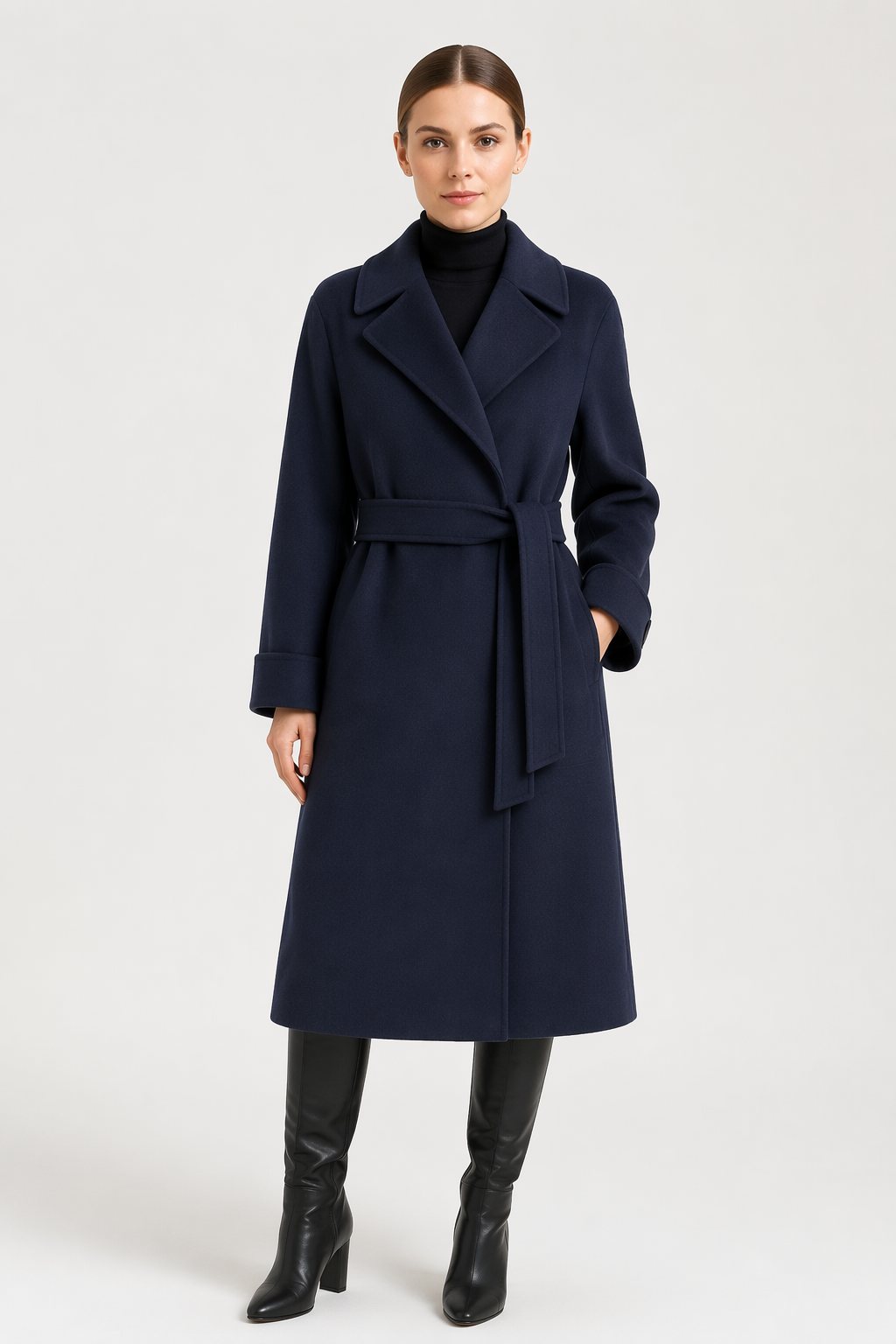
01 · Styles
The range.
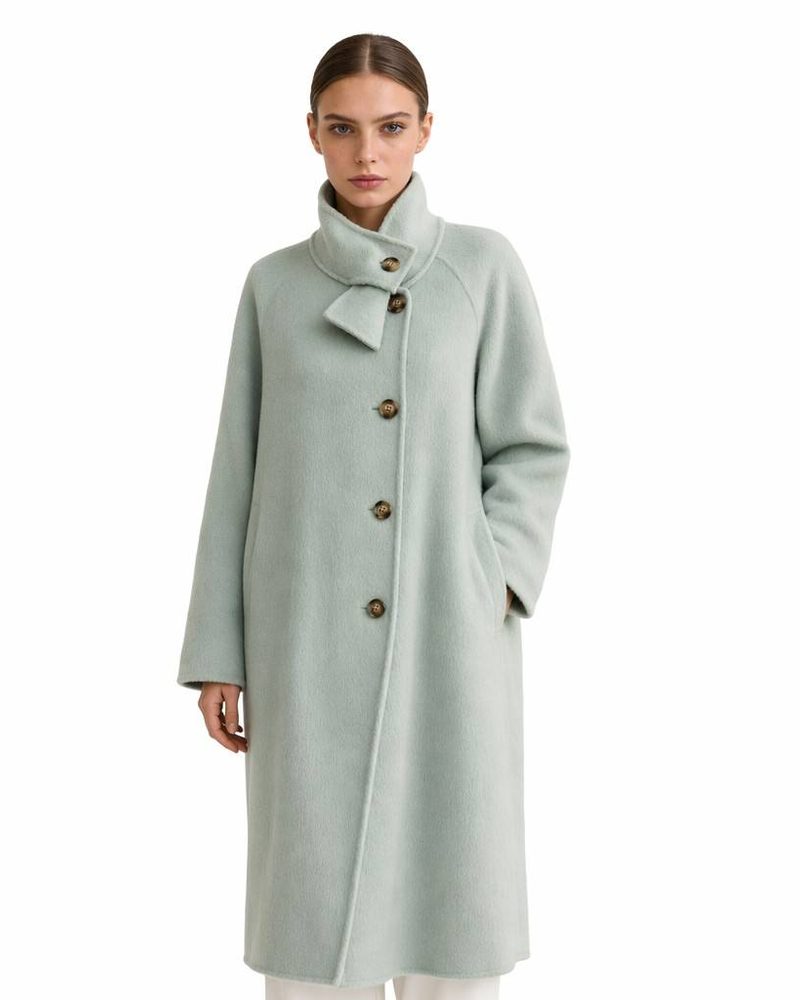
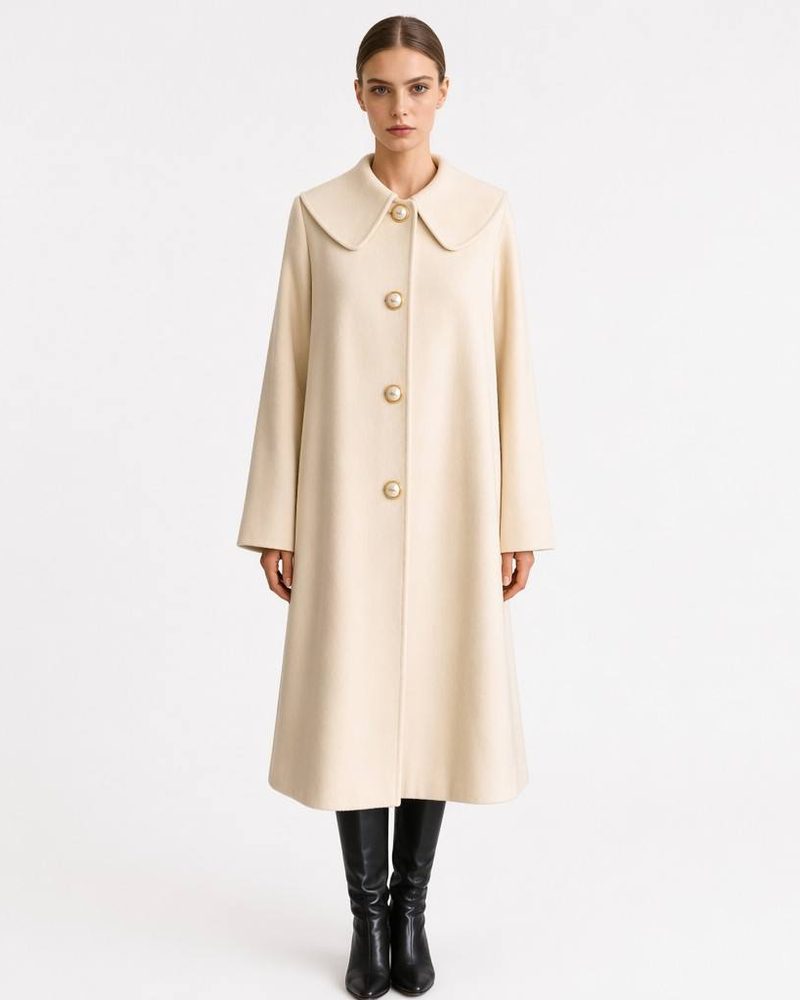
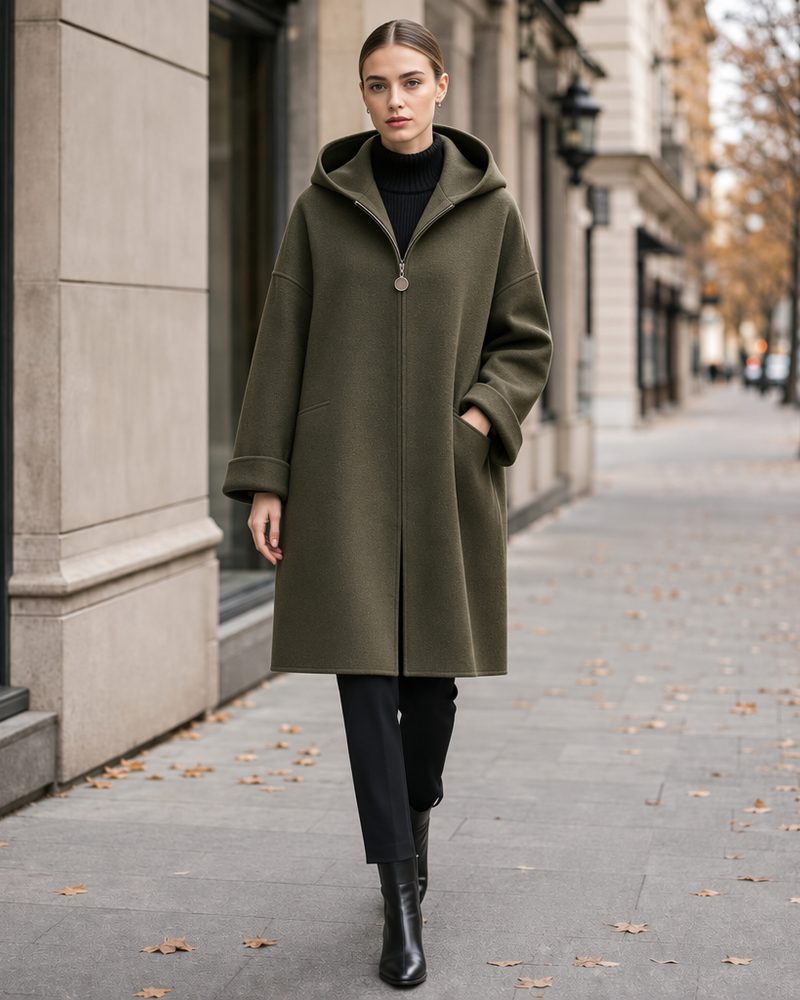
Six patterns we already make. Any of them can be changed — length, collar, closure, cloth, trims. Ask about one and we will send the spec sheet for that pattern.
02 · The cloth
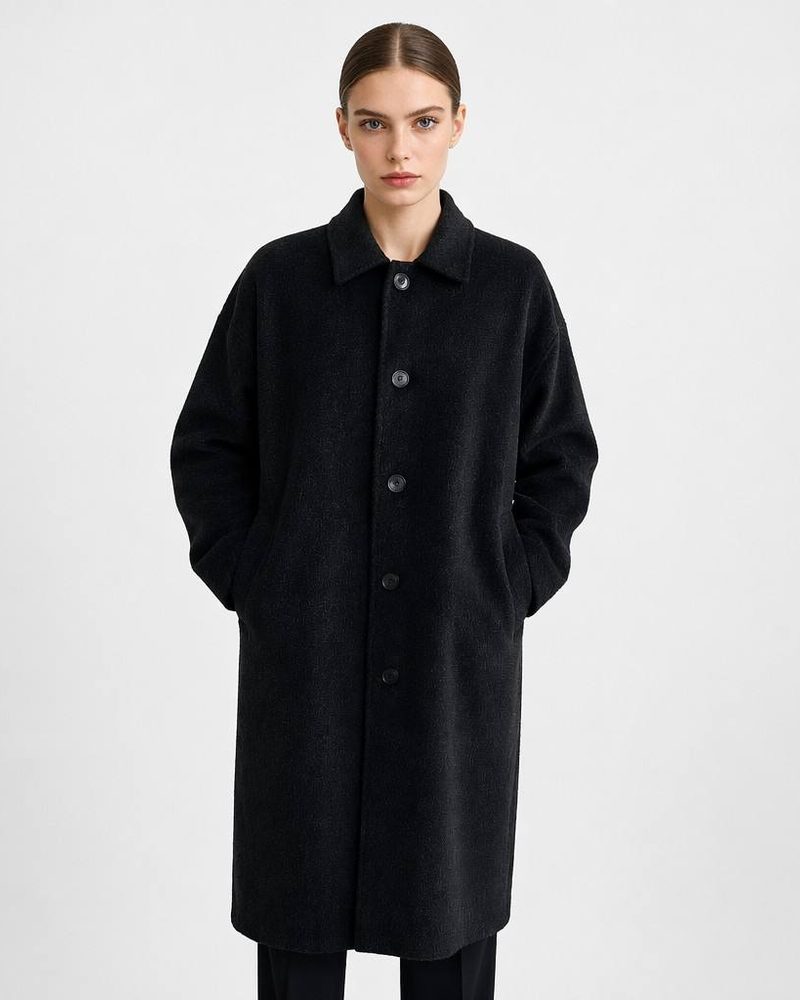
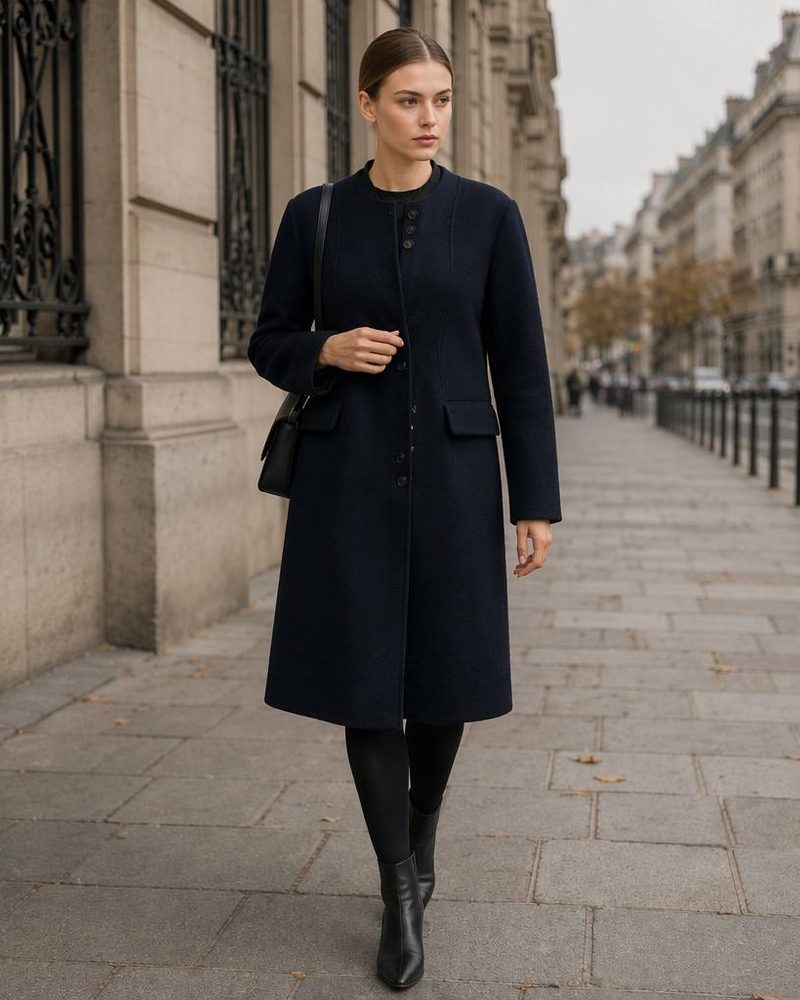
Two faces, one cloth.
Double-faced wool is not a lined coat with the lining taken out. Two woven faces are joined into a single cloth, so the inside of the coat is a finished face.
No lining to match
Because both sides are the cloth, there is no lining to cut, match or bag out. The coat weighs less, does not twist, and has nothing that rubs against a shirt.
The edge is the finish
Seam allowances are split between the two faces, folded back into the cloth and closed — by hand for the curves, on a machine built to copy it for the long runs.
Reversible, if you want it
Both faces are finished, so a coat can be made to wear on either side. Pockets and trims change with it, so it is quoted as its own construction.
03 · In motion
Twenty seconds, no commentary.
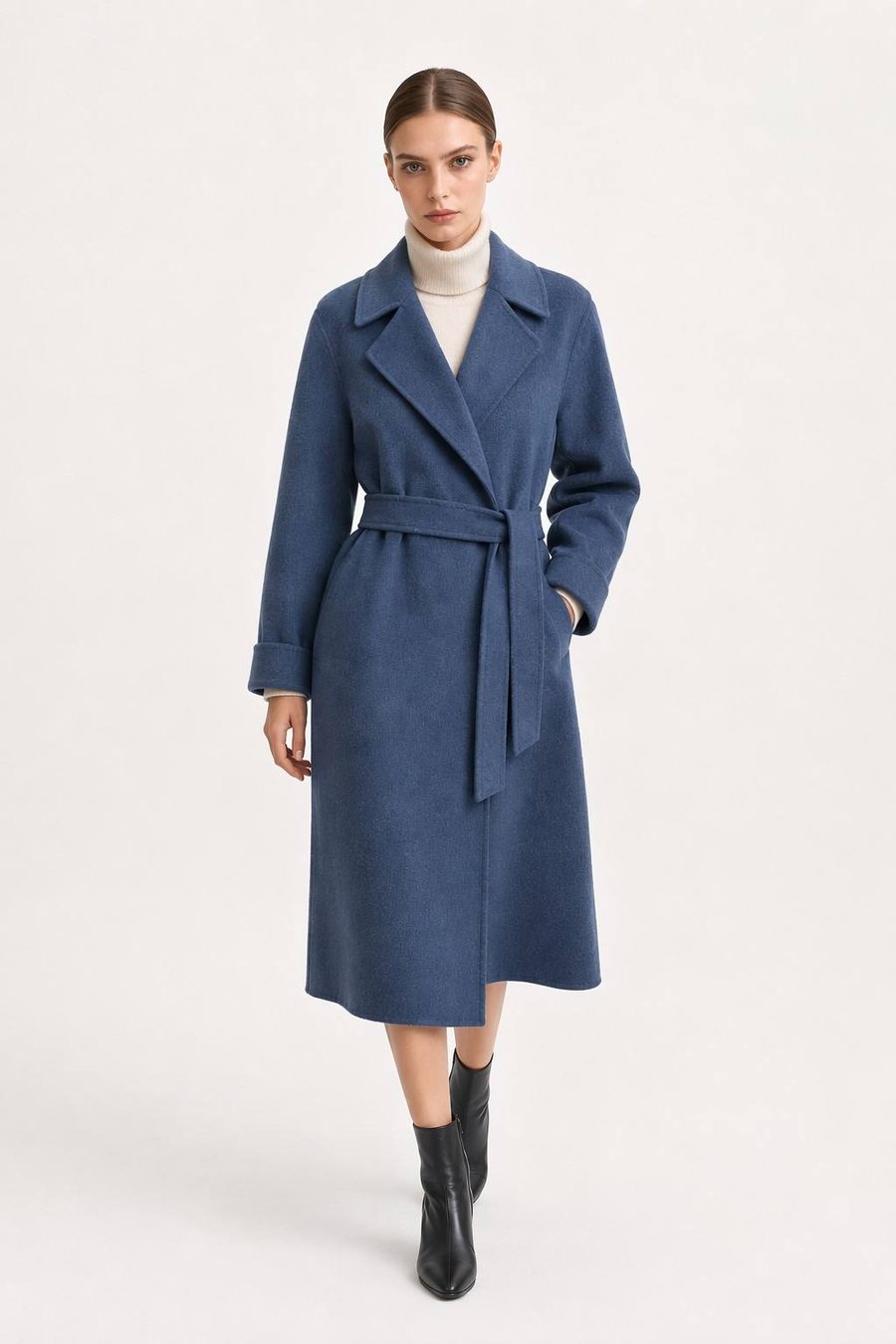
The coat walking: how the cloth falls, where the belt sits, how the collar stands when it is open.
Shot on a model, not a mannequin. If you need a specific detail — the split edge, the inside face, a buttonhole — ask and we will shoot that for you.
04 · The workshop
The floor it is made on.
Cutting, sewing and the sample room in Guangzhou — raw footage, filmed as a buyer walks it. If you want to see a specific operation, ask and we will film that instead.
05 · Made to spec
What is fixed, and what is yours.
The construction is fixed. Everything else is set on a spec sheet before the sample is cut, and the bulk is made to that sheet.
| Construction | Double-faced, unlined. Two woven faces joined into one cloth; every edge split, folded in and closed. |
|---|---|
| Cloth | Wool, wool-cashmere or a wool blend. Your nominated mill, or the ones we use. |
| Seams | Hand-joined with an invisible stitch, or machine-joined. The two are priced separately and both are shown on the first sample. |
| Closure | Single or double breasted, self belt, wrap front or concealed placket. |
| Pockets | Welt, flap, patch or in-seam, bagged in the same cloth. |
| Buttons | Horn, corozo, resin or metal; covered buttons on request. Your trim or ours. |
| Labels | Main label, care label and hangtag, to the labelling rules of the market you sell into. |
| Size range | Cut to your measurement chart and grade rules. |
06 · Colourways
The shades the cloth runs in.
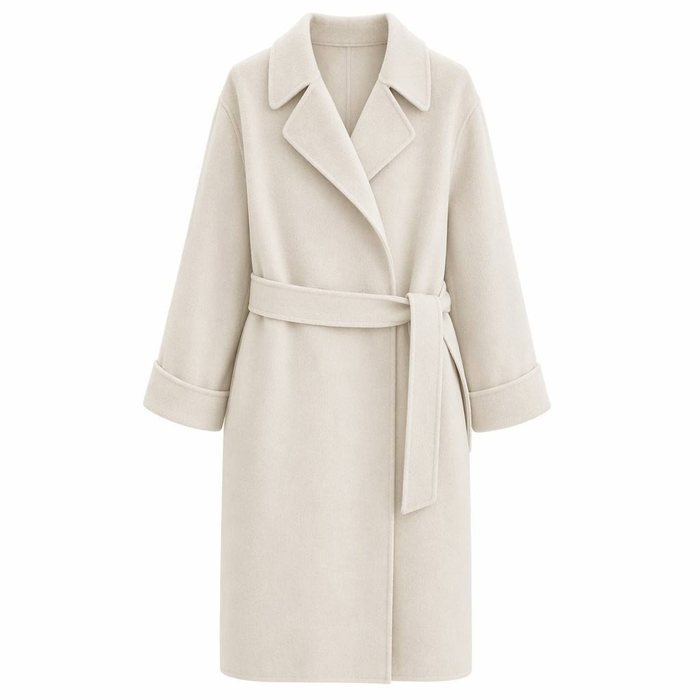
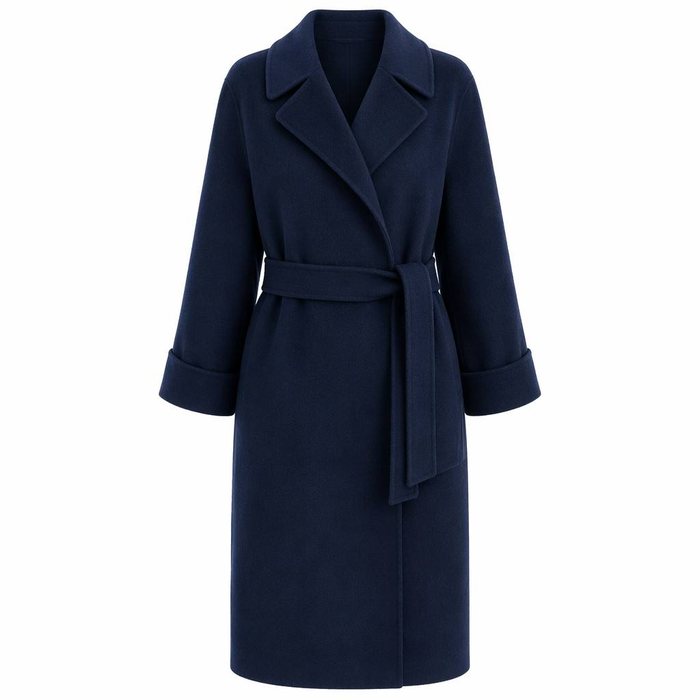
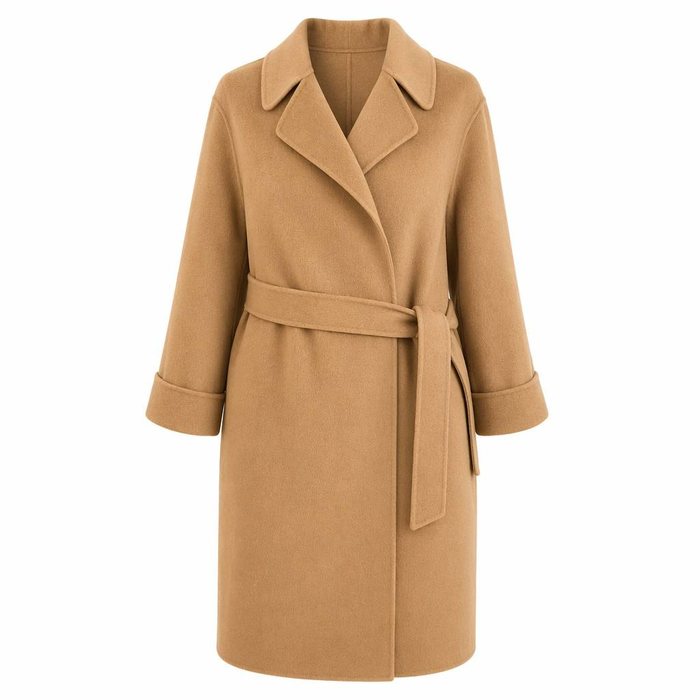
These are the shades the cloth is usually dyed in. A different colour is a lab dip first, then bulk.
07 · How it is made
Five steps, and the third one is the coat.
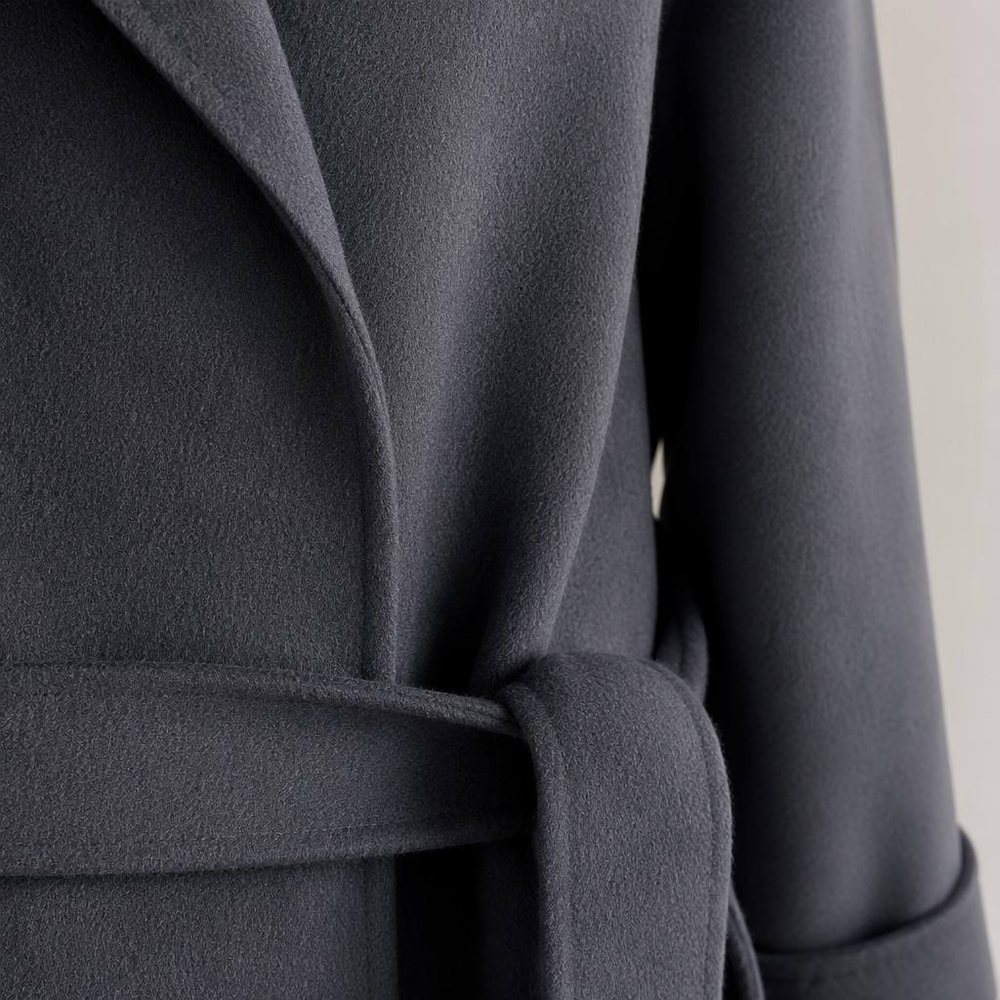
The edge is not hemmed and covered. It is opened, folded back into the cloth and closed again, by hand or machine.
STEP 01
Cut in pairs
Two faces are cut as one, matched for grain and shade. A panel that is off-grain cannot be fixed at the seam.
STEP 02
Split the edge
The seam allowance is split between the two faces, by hand or on a splitting machine, so each side folds back on itself.
STEP 03
Fold and join
The raw edge is folded in and closed with an invisible stitch — hand for the curves, machine for the long runs.
STEP 04
Press as you go
Each seam is pressed as it closes, not at the end. A double-faced seam pressed late shows a ridge forever.
STEP 05
Finish
Buttonholes, buttons, pocket mouths, labels and a final press. Then the coat is measured against the approved sheet.
08 · Before it is packed
What we check, and what you can check.
Third-party inspection is welcome at your cost. What fails a double-faced coat is rarely the sewing — it is the seam closing, the pressing, and whether the two faces match.
We photograph the bulk against the approved sample before it is packed, and you are welcome to be on the call while it is checked.
- Seam closure — closed along its full length, no gap at curves, corners or pocket mouths.
- Both faces clean — no chalk, oil, needle marks or shine from the iron.
- Grain and shade — matched across panels, nap direction consistent on collar and lapel.
- Measurements — against the approved spec sheet, point by point.
- Trims — buttons, buttonholes and pockets tested; labels correct for the market.
- Pressing — no ridge along the joined edge, no mark where the clapper sat.
09 · Packing and shipping
Packed the way your warehouse wants it.
| Flat pack | Polybag and carton to your specification, folded to your measurement. |
|---|---|
| Hanging | On request, on your hanger or ours. |
| Carton marks | Your shipping marks, or ours if you have none. |
| Shipping | Air or sea, on your forwarder or ours. Ex works or FOB, as agreed. |
| Documents | Invoice, packing list, and certificates on request. |
10 · Questions buyers ask
The short answers.
Can you make it in cloth I supply?
Yes. Send the mill's article number, composition and weight, and a metre or two for the sample. If the cloth is too loose or too heavy for the seam, we will say so before cutting — that is a construction problem, not a price problem.
Hand-joined or machine-joined — which should I choose?
Machine for volume and consistency, hand where the coat will be looked at closely. Many buyers machine the long straight runs and hand the collar roll and pocket corners. We show both on the first sample.
Can I have my own labels and packaging?
Yes — main label, care label, hangtag, polybag and carton marks are all yours. We follow the labelling rules of the market you sell into, including fibre content and care symbols.
Do you make reversible coats?
Yes, as its own construction. Both faces have to be finished, the pockets are doubled and the trims change, so it is quoted separately from the standard single-faced coat.
What do you need in order to quote?
A tech pack, a reference sample or clear photos; the quantity and size range; and the market you sell into. With those we can come back with what is makeable, what it costs and what we would change.
11 · Contact
Tell us what you need.
Fill this in and it opens WhatsApp with your details already written. If you would rather write an email, use the address below.